When Remembrance Becomes Infrastructure
Twenty-five years after September 11, the deeper test of institutional memory is whether lessons can outlast the people who learned them firsthand.

11 min
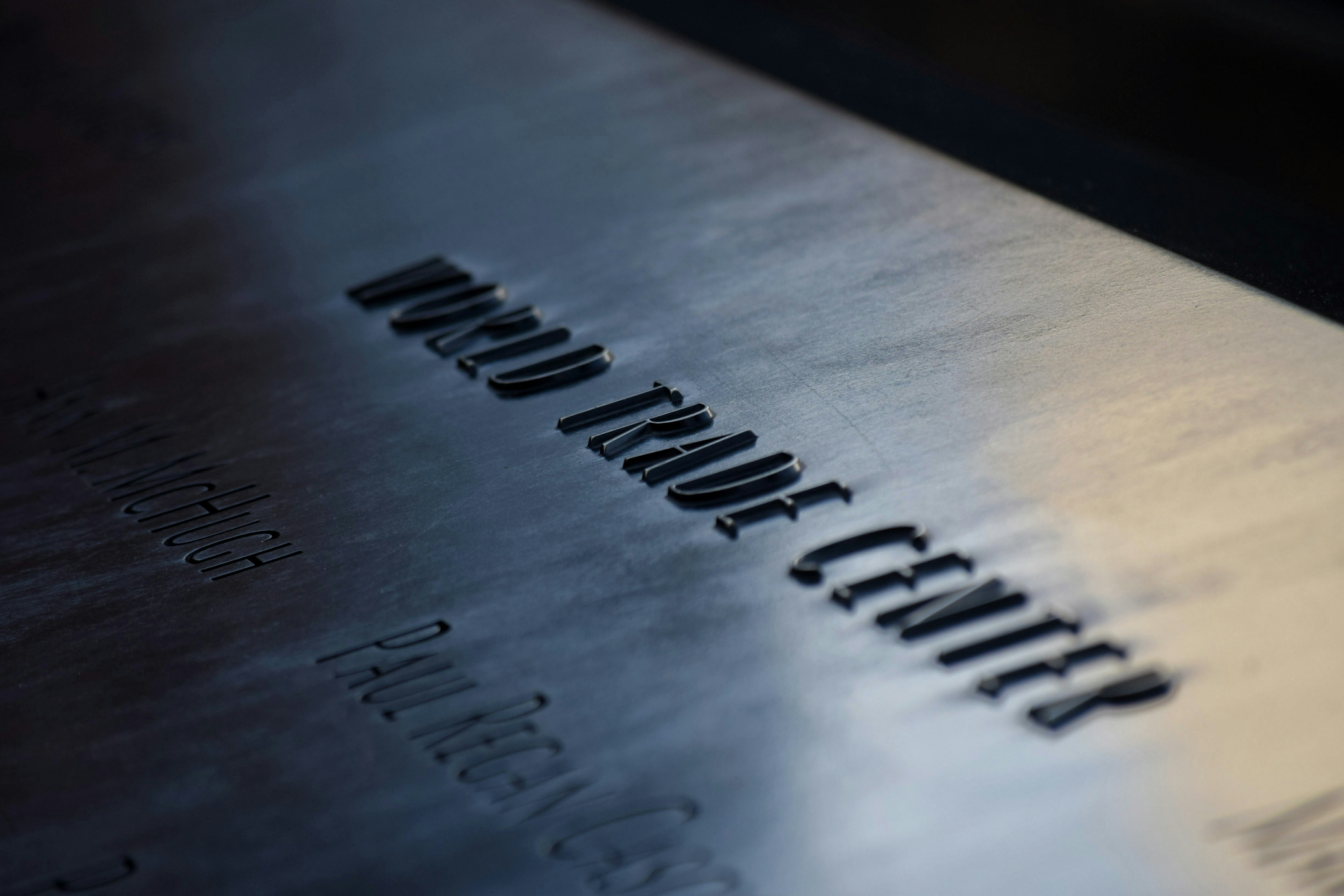
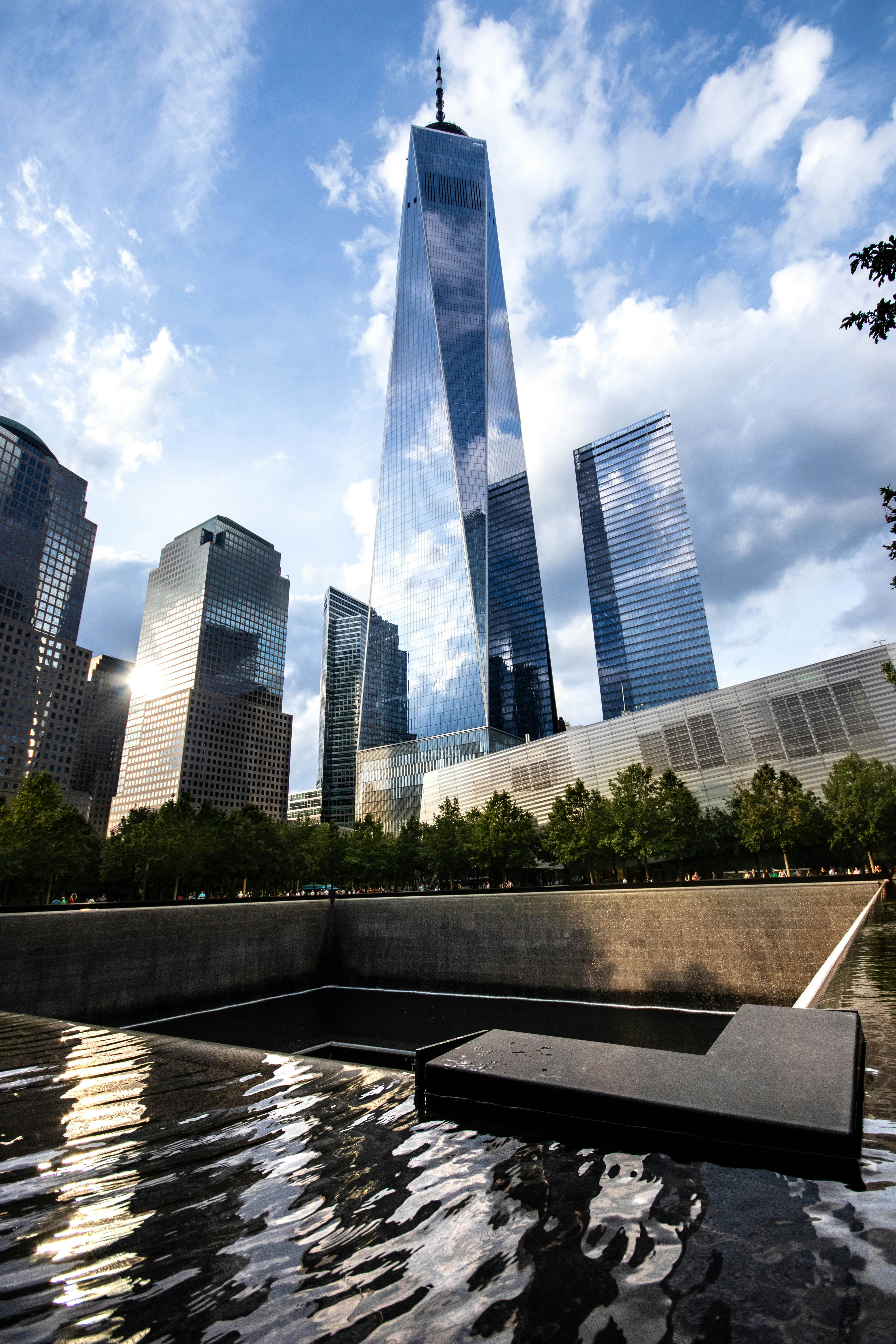
Across the street from the place where the World Trade Center once stood, the doors of a firehouse are still open.
Engine 10 and Ladder 10 still leave when calls come in. Firefighters return, put away their equipment and move through the ordinary rhythms of a working station. Outside, visitors stop beneath the bronze memorial built into the firehouse. Some have traveled thousands of miles. Others are simply passing on their way toward the reflecting pools nearby.
This is Ten House.
Sal Argano is 65. On September 11, 2001, he was temporarily assigned to another firehouse rather than his usual post in Lower Manhattan. Six members of Ten House were among the 343 FDNY firefighters killed that day. Twenty-five years later, Argano is the last firefighter who was assigned to the house in 2001 and still works there.
Time has changed the station around him. Some of the firefighters working there today were not yet born when the attacks occurred. Others learned the history of the house from people who learned it from those who were there. Argano continues to tell younger firefighters what he remembers, carrying firsthand experience into a generation that increasingly knows September 11 through inheritance rather than memory.
The responsibility is becoming generational, and eventually every institution confronts some version of the same handoff: the people who remember why something changed begin transferring responsibility to people who know that it changed, but did not experience the reason themselves.
When the Witness Becomes History
Twenty-five years is long enough for memory to change form.
For people who remember September 11, the day can still exist through fragments no report could fully preserve: where they were standing, who called, what they saw on television, the confusion before the scale of what had happened became clear.
For millions of younger Americans, September 11 arrives differently.
It is inherited.
Photographs, testimony, classrooms, memorials and recorded images preserve an event after direct memory becomes impossible. Institutions face a harder version of that transition because they must preserve not simply what happened, but what the event revealed about the assumptions that existed before it happened.
An organization can remember the date of a failure while gradually forgetting the reasoning that followed it. An after-action report may remain accessible long after the instinct that made its recommendations urgent has faded. Policies can survive the people who understood their origins, leaving the record intact while the context around it thins.
Institutional memory is not what an organization can recall. It is what the organization no longer has to relearn through consequence.
— Risk Ready Intelligence
The Control Without a Story
Major failures usually alter the organizations that survive them. Reviews are conducted, authority shifts, communication pathways are reconsidered, and new safeguards emerge because consequence has exposed something the previous architecture did not adequately see.
For a time, the reason behind those changes requires little explanation. The event itself supplies the context. But leadership changes, systems evolve and the people closest to the original failure gradually leave. A later generation can inherit a requirement without inheriting the conditions that once made the requirement obvious.
Eventually someone asks, Why are we still doing this?
That is not an irresponsible question. Mature institutions should challenge their own controls. Processes should not survive indefinitely simply because they are old, and yesterday’s solution should never be mistaken for permanent architecture. The risk appears when an organization can explain what a safeguard requires but can no longer explain what it was designed to prevent.
At that point, the control is increasingly judged through the inconvenience it creates. An additional review appears duplicative. A second communication pathway seems unnecessary. A continuity exercise interrupts ordinary work. An escalation requirement slows a decision that might otherwise move quickly. If the underlying risk has remained quiet for long enough, efficiency can begin making a persuasive argument against memory.
A control whose purpose is forgotten will eventually be judged only by its friction.
— Risk Ready Intelligence
That is how institutional lessons can disappear without anyone consciously deciding to forget them.
When Prevention Begins to Look Unnecessary
Successful prevention contains a paradox: the better it works, the less visible evidence it produces of its own necessity.
A safeguard helps prevent the event it was designed to interrupt. The event does not occur. Years pass without consequence, and eventually absence can be interpreted not as evidence that protection may be working, but as evidence that the threat itself no longer deserves the same attention.
Institutions encounter this problem whenever controls outlive the emotional proximity of the failure that created them. What remains is architecture detached from the experience that once made its purpose self-evident.
That is why controls need more than documentation. They need provenance.
An institution should understand what conditions created a safeguard, which assumption failed before it existed, what behavior the control was intended to interrupt, and what evidence would justify replacing or removing it. Without that lineage, a control environment can become a collection of inherited instructions. With it, safeguards remain connected to institutional memory.
This does not mean preserving controls forever. In fact, understanding their original purpose is what allows them to evolve responsibly. An organization cannot know whether a safeguard has become obsolete if it no longer remembers what problem the safeguard was built to solve.
What September 11 Changed
The architecture that followed September 11 did not emerge from a single decision.
The 9/11 Commission examined emergency preparedness, communication, coordination and continuity across public and private systems. Its final report argued that preparedness for rescue, restart and recovery should include evacuation planning, adequate communications capability and continuity-of-operations planning. The Commission’s work also documented how shortcomings in command, communication and preparedness shaped the response that day.
Aviation security changed as well. Congress created the Transportation Security Administration after the attacks, moving passenger screening under federal responsibility. Over the years that followed, screening technology, baggage security and other aviation protections continued evolving as the threat environment changed. TSA itself describes its mission as protecting a transportation system against threats that have evolved since September 11.
That evolution matters because the lesson of September 11 was never that institutions should discover one permanent configuration and preserve it untouched. Threats continue moving. Technology changes. Dependencies deepen. Architecture has to respond without losing the reasoning that earlier failures made visible.
Institutional memory therefore cannot mean preparing forever for the last event. It means allowing the lesson extracted from the last event to remain useful while the organization prepares for circumstances the original witnesses may never encounter.
Remembrance and Readiness
That distinction is especially visible on this anniversary.
On September 4, New York City issued two executive orders ahead of the 25th anniversary of the attacks. The first established September 11 as a citywide Day of Remembrance and Service, explicitly honoring those who were killed, first responders and others whose lives were changed by the tragedy.
The second addressed continuity itself.
Executive Order 22 modernized New York City’s continuity framework, integrating continuity of operations, continuity of government and mission assurance across city agencies. The administration described the action as the first modernization of the city’s continuity-of-operations approach since 2007 and created a senior interagency Continuity and Mission Assurance Team focused on preparedness and the continued delivery of essential services during disruption.
Placed beside one another, the actions reveal different dimensions of institutional memory. One preserves meaning; the other preserves capability. Neither is sufficient on its own. Commemoration without institutional learning can gradually become ceremonial, while preparedness detached from remembrance can become procedural, separating a safeguard from the human consequence that once gave it purpose.
The stronger relationship exists between the two. An institution remembers what happened, understands what the event exposed about its assumptions, and continues redesigning itself so that the lesson remains useful under conditions the original witnesses may never encounter.
That is when remembrance becomes infrastructure.
Continuity Is Not Preservation
Institutional memory should never be confused with resistance to change. Continuity does not require preserving an organization exactly as it existed after a crisis, because the environment surrounding that organization will continue to move.
New York in 2026 does not operate inside the technological, physical or security environment of 2001. Essential services now depend on digital infrastructure in ways they did not twenty-five years ago. Physical operations and technology systems are increasingly intertwined, while organizational dependencies stretch across agencies, vendors and infrastructure that earlier continuity frameworks could not fully anticipate.
New York’s updated continuity order recognizes that problem directly. It calls for coordinated readiness across emergency management, technology, physical assets and other functions precisely because continuity has to account for changing forms of disruption rather than preserve an older framework simply because it once represented progress.
That offers a more useful definition of institutional maturity. A mature organization does not evaluate a safeguard simply by asking whether it is old. It asks whether the reasoning beneath it remains valid, whether the underlying risk has changed, and whether the present architecture still addresses the problem the organization believes it addresses.
Sometimes that examination will justify removing a control. Sometimes it will require redesigning one. In other cases, an apparently inconvenient safeguard will prove to be the remaining trace of a lesson the institution cannot afford to learn twice.
Without an understanding of provenance, organizations can confuse age with irrelevance and friction with inefficiency.
What the Next Generation Inherits
Eventually, every crisis moves beyond living institutional memory. Executives change, investigators retire, operational teams turn over, and the people who worked through the original event are replaced by people who encounter it through documentation, training and inherited procedure.
The transfer itself is unavoidable. The loss of context is not.
Institutions can preserve more than instructions by preserving the reasoning behind them. Critical safeguards can remain connected to the failures and near-misses that shaped them. Leadership transitions can carry historical context alongside responsibility. Earlier findings can be revisited before architecture is changed simply because its original purpose is no longer obvious.
That discipline becomes especially important when stability lasts for years. The longer an organization operates without repeating a major failure, the easier it becomes to conclude that the conditions that once made the failure possible have disappeared.
Sometimes they have. Risk changes, technology improves and yesterday’s safeguard can genuinely become obsolete. But sometimes the organization has simply become protected enough to forget what being unprotected looked like.
Distinguishing between those conditions requires more than historical knowledge.
It requires institutional judgment.
The Work Continues
At Ten House, the difference between memory and continuity is visible through the open bay doors.
People still arrive to see the memorial, and the names of firefighters killed twenty-five years ago remain part of the building. Inside, however, Ten House has not become a museum. Calls still come in. Firefighters leave the station and return from emergencies. Younger members inherit responsibilities from those who came before them, even as the generation that experienced September 11 firsthand grows smaller.
That may be the harder form of remembrance: not simply preserving what happened, but preserving what it changed.
One day, no firefighter working at Ten House will be able to say that he was there in 2001. That day is inevitable. The more important question is what remains when the last firsthand memory leaves with him.
Twenty-five years after September 11, the bay doors are still open. The names remain outside, while inside the work continues.
That is what memory looks like when it becomes responsibility—and what remembrance looks like when it becomes infrastructure.
Founder, Risk Ready Intelligence
Financial crime and institutional risk professional focused on governance, judgment, and emerging threat environments.
View author profileSources
- •Associated Press — "A NYC firehouse was first to respond on 9/11. 25 years on, Sal Argano is the last still on staff." — September 2026. Reporting on Ten House, Sal Argano, the six Ten House firefighters killed on September 11, and the generational transfer of memory within the firehouse.
- •National Commission on Terrorist Attacks Upon the United States — The 9/11 Commission Report, Chapter 12: "What to Do? A Global Strategy." — 2004. Supporting the article's discussion of preparedness, evacuation planning, communications capability, continuity of operations, and institutional readiness.
- •Transportation Security Administration — "TSA officials commemorate 20th anniversary of the federalization of Greater Binghamton Airport." — September 2, 2022. Supporting the historical discussion of TSA's creation after September 11, federalization of airport screening, evolving screening technology, and transportation-security adaptation.
- •New York City Mayor's Office — Executive Order No. 21: "Establishing September 11 as a Citywide Day of Remembrance and Service." — September 4, 2026. Establishing the citywide Day of Remembrance and Service ahead of the 25th anniversary.
- •New York City Mayor's Office — Executive Order No. 22: "Safeguarding New York City's Essential Services." — September 4, 2026. Modernizing New York City's continuity-of-operations framework, establishing the Continuity and Mission Assurance Team, and strengthening continuity planning, mission assurance, and essential-service readiness.
Related Briefings
How Silence Forms Inside Risk Systems
Silence does not require conspiracy. It requires only structure — the accumulated effect of rational decisions that individually make sense but collectively suppress signal.
GovernanceWhat the Organization Cannot See
What the Kawhi Leonard investigation reveals about disclosures, fragmented information, outside relationships, and the limits of institutional visibility.