When a Ship Turns Around
What sanctions look like when power enters the shipping lane
“When a ship turns around, the event is not over when the vessel changes direction. That is merely the visible beginning.”
— Risk Ready Intelligence
It begins in open water.
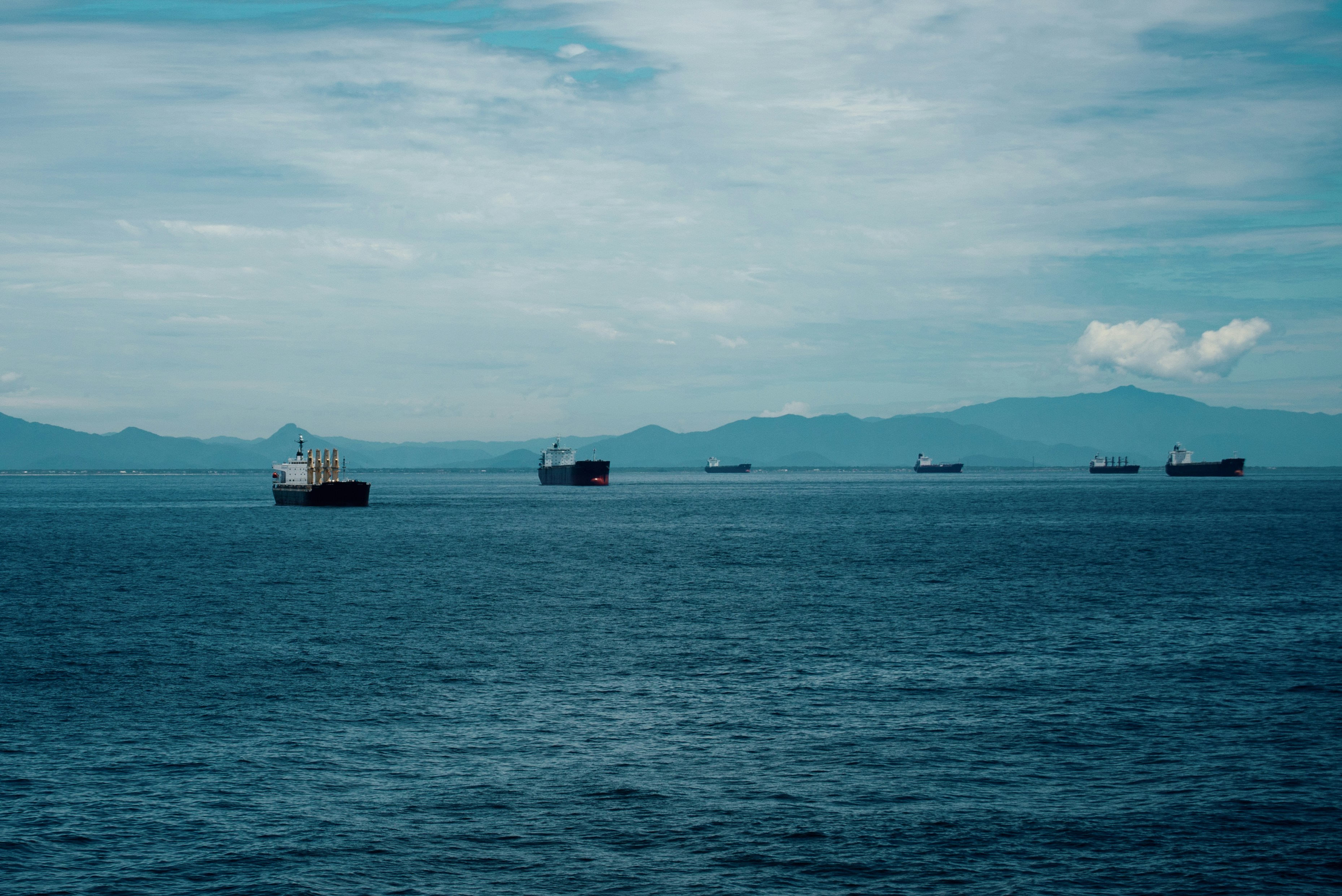
A merchant vessel is moving through one of the most important energy corridors in the world. The route is commercial. The cargo has purpose. The paperwork exists. On the surface, this is still the language of trade. Then the radio breaks. A voice enters the channel not as conversation, but as authority. Turn around.
That is the moment sanctions cease to feel abstract. They are no longer just names on lists, regulatory updates, or legal restrictions buried inside policy manuals. They become visible as interruption — a redirected ship, a halted route, a transaction forced to acknowledge that trade does not move only through markets. It moves through power.
In April, Reuters reported that six merchant ships turned back as part of a U.S. blockade applying to vessels going to or from Iran. Reuters also reported that any vessel entering or departing the blockaded area without authorization could face interception, diversion, or capture. This was not a theoretical sanctions conversation. It was policy made operational in one of the most consequential waterways in the world.
That matters because the Strait of Hormuz is not simply a geopolitical symbol. It is one of the arteries through which modern energy and commercial stability continue to move. The U.S. Energy Information Administration has described it as a critical oil chokepoint, with roughly one-fifth of global petroleum liquids consumption moving through it. When pressure enters a passage like that, the effect does not remain at sea. It enters pricing, transport, planning models, risk assumptions, and eventually ordinary life itself.
Sanctions as Architecture
That is why sanctions should not be understood merely as restrictions placed on adversaries. They are also instruments that shape movement, uncertainty, and consequence. When enforcement becomes visible in a maritime chokepoint, the message is larger than the vessel being redirected. It is a demonstration that power still has the ability to interrupt commerce in real time. And when that happens in Hormuz, markets listen.
Sometimes the realization arrives long after the office has gone quiet. A sanctions professional sits on the sofa after a long day with the television glowing across the room. The collar is loosened. The shirt is untucked. The remote rests in one hand while headlines move across the screen about ships turning around near the Strait. For a moment, it is not a briefing, not a policy note, not a compliance alert, and not another item to assess when the laptop opens again in the morning. It is heavier than that.
Somewhere between the rerouted vessels, the energy commentary, and the careful language used by institutions, a familiar weight settles in the chest. This is different. Not because sanctions are new, and not because maritime pressure has never existed before, but because the connection becomes visible all at once. A ship turns around on the screen, and a sanctions professional understands that the event is already moving beyond the water. It is moving into markets, into institutional judgment, and into the assumptions people make about how stable the system really is when everything appears to be functioning normally.
Reuters reported that oil prices jumped back above $100 a barrel before easing, and that threats to shipping in the region had already helped push global oil prices significantly higher during the conflict. That is the bridge many people miss. A ship turning around in a strategic strait may look distant on paper, but its consequences can travel quickly into energy pricing, freight exposure, and the everyday cost of normal life.
That is where sanctions stop feeling like foreign policy alone. They become domestic — visible at the pump, in transport costs, in inflation pressure, and in the quiet realization that the global system is more fragile than it appears when the routes are open, the prices are stable, and the ships are moving without interruption.
The Convergence of Enforcement
For professionals in sanctions, financial crime, payments, trade, and governance, this is the deeper lesson. The modern sanctions environment is not only about whether a name appears on a list or whether a payment matches cleanly against a screening engine. It is about what happens when enforcement, logistics, energy, and monetary power begin pressing on the same nerve at once.
A redirected vessel is not merely a shipping event. It is a sign that compliance, military reach, economic pressure, and market confidence are no longer operating in separate rooms. They are meeting in the same channel. That convergence should force a more serious question: if sanctions power must now be asserted this visibly, what does that reveal about the system behind it? It reveals strength, certainly. But it also reveals stress. Because every time enforcement power becomes more direct, sanctioned states and exposed networks gain a stronger incentive to search for alternate routes, alternate counterparties, alternate settlement methods, and eventually alternate monetary arrangements.
The Search for Side Doors
Reuters reported this month that Russia and China now conduct nearly all of their bilateral trade in rubles and yuan, a structure that helps them reduce reliance on Western financial channels. That does not mean the dollar has been replaced — it has not. But it does mean the search for side doors is no longer theoretical. That is what makes this moment so important.
Sanctioned countries do not need to overthrow the dollar system to weaken its coercive reach. They only need enough alternatives to reduce how completely they depend on it. Local-currency trade, intermediary routing, opaque commercial structures, and alternative settlement rails do not have to replace the existing order in full to matter. They only have to make restriction harder to enforce cleanly.
A redirected vessel signals who still has reach. It signals how force and finance remain tied together. It also signals how quickly the world may begin adapting when that reach is used more openly. So when a ship turns around in Hormuz, the event carries more than maritime significance. It becomes a signal about power, enforcement, and the potential fragility of the assumptions that underpin the current global order.
Beyond Legal Mechanism
That is why this is not just a sanctions story. It is a power story — a story about whether the global system still accepts that the United States can interrupt movement, shape trade behavior, and condition access through the combined force of military reach, financial centrality, and dollar dominance. And it is also a story about what happens when that centrality becomes visible enough that the rest of the world begins planning around it.
For years, sanctions were often discussed as if they were legal mechanisms with economic consequences. They are that. But moments like this reveal something deeper. Sanctions are also architecture — architecture of pressure, deterrence, and interruption. They tell us where power resides, how it is enforced, and how far it can extend before the system around it begins quietly adjusting.
The Real Questions
That is why the first real sign of a sanctions shock may not be a designation notice or a compliance alert. It may be a rerouted vessel, a delayed cargo, a jump in oil, or a rising gas price experienced by people who never saw the original point of pressure.
This is where the conversation becomes larger than sanctions teams alone. It should concern risk leaders, governance professionals, operations executives, and anyone responsible for how institutions interpret instability. Because the next phase of sanctions risk will not be defined only by who is prohibited. It will be defined by how power is exercised, how markets react, and how quickly alternative pathways begin forming in response. That is why moments like this deserve more than technical treatment. They deserve reflection.
When a ship turns around, the event is not over when the vessel changes direction. That is merely the visible beginning.
— Risk Ready Intelligence
The real question comes after: What else begins to turn with it? Trade expectations. Oil prices. Confidence. Settlement behavior. Strategic alignment. And perhaps, over time, even the assumptions holding the monetary order together.
While working through these themes, I kept returning to a principle that shaped much of what I wrote in Risk Ready: the most serious threats rarely present themselves first as threats. Sometimes they present as interruption. Sometimes as normality. And sometimes as a single moment in open water when the world is reminded that commerce has never been only commerce. It has always been power moving in another form.

Founder, Risk Ready Intelligence
Financial crime and institutional risk professional focused on governance, judgment, and emerging threat environments.
View author profileSources
- •Reuters, "Six ships turned around as part of Strait of Hormuz blockade, US military says"
- •U.S. Energy Information Administration, Strait of Hormuz chokepoint reference
- •Reuters, reporting on Russia-China trade in rubles and yuan
Related Briefings
Why Institutions Miss Signals Before Enforcement
The warning signs were visible. The escalation pathways existed. Yet the organization failed to act until external pressure forced recognition. This pattern repeats across sectors.
GovernanceWhen Governance Becomes Performance
Compliance frameworks, oversight committees, escalation protocols. All the structures exist. But when risk actually materializes, why do so many governance systems fail to function as designed?